Project Overview
Alpha3D was building the future of 3D content creation—an AI-powered platform that could generate production-ready 3D models from simple inputs. As Project Manager and Team Lead, I was hired to scale operations from a small team to an enterprise-ready production machine serving the world's top luxury and eCommerce brands.
This role combined three distinct responsibilities: (1) managing 3D production operations for enterprise clients, (2) contributing to AI platform development by providing training data and requirements, and (3) leading team operations including hiring, performance management, and budget ownership.
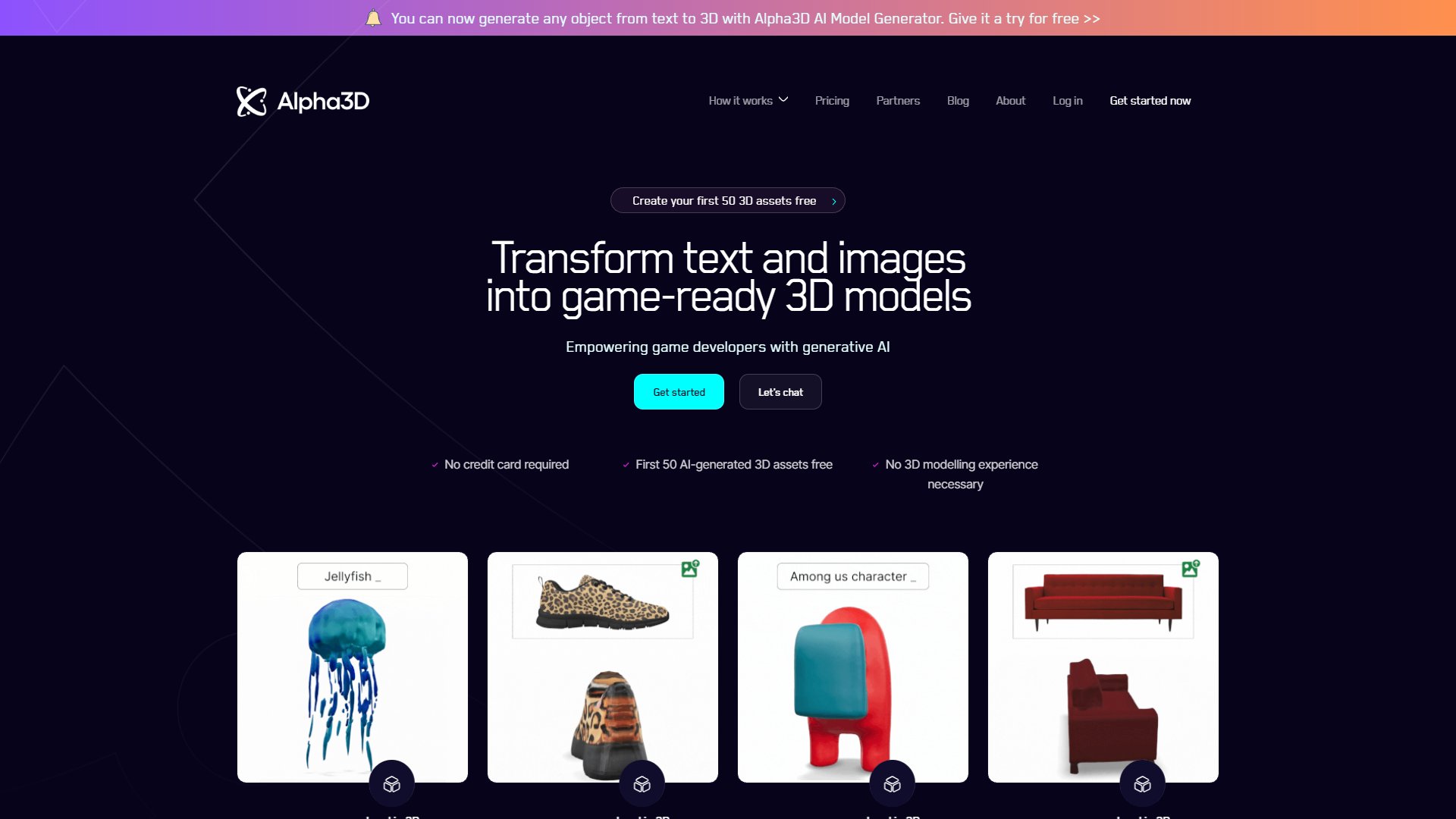
Alpha3D: Transform text and images into game-ready 3D models
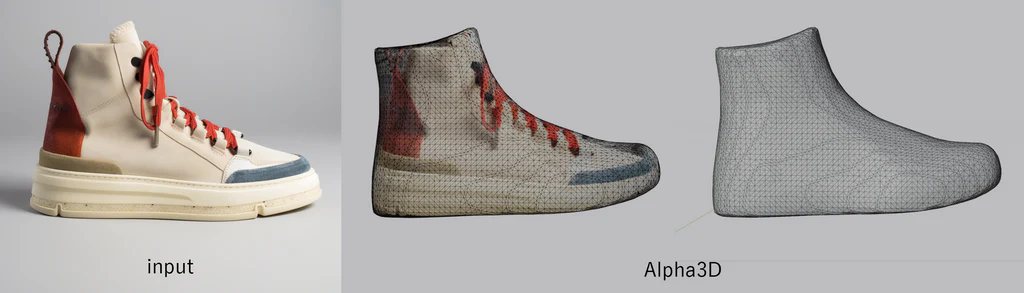
AI-powered 2D to 3D conversion pipeline

Generative AI creating volumetric 3D structures

High-fidelity 3D models for luxury fashion clients (LVMH, Gucci)
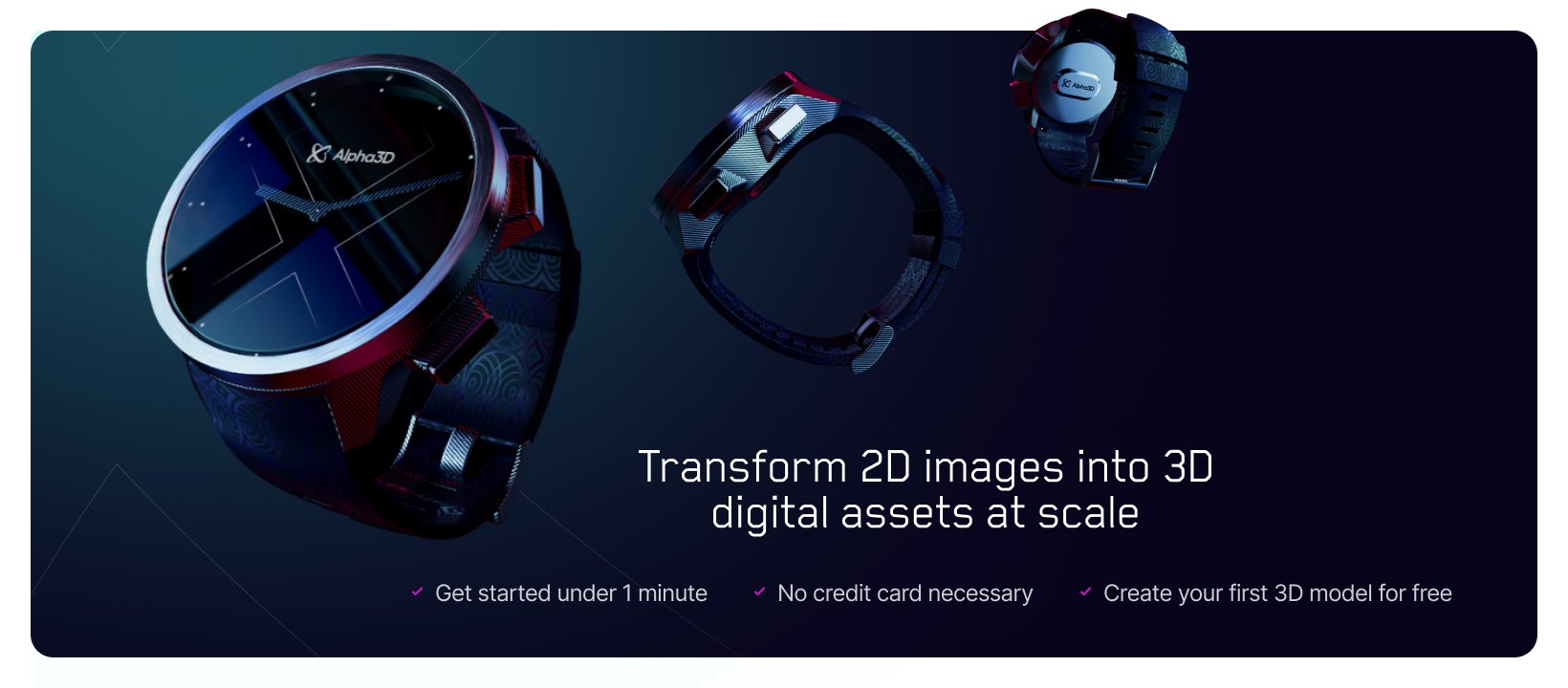
Scalable 3D asset generation at enterprise scale
My Dual Role
1. Production Operations Leadership
Managed the full lifecycle of client 3D modeling projects:
- Client Communication: Primary point of contact for LVMH, Amazon, Farfetch, Gucci, and other enterprise accounts
- Project Scoping: Collected requirements, estimated timelines, negotiated pricing with clients and vendors
- Resource Allocation: Assigned 3D artists based on specialization (fashion, automotive, electronics, hard-surface)
- Quality Assurance: Led QA team ensuring every model met client specifications before delivery
- Budget Management: Tracked weekly spend, identified cost savings, protected 5-10% profit margins on all projects
2. AI Platform Contribution
Worked directly with AI/ML team to improve the 3D generation tool:
- Training Data Curation: Directed artists to create high-quality 3D models specifically for AI training datasets
- Requirements Definition: Provided input on what materials, prompts, and functionalities users would need
- Quality Standards: Established benchmarks for AI-generated output quality
- Product Feedback: Weekly standups with AI team analyzing outputs, discussing improvements
🎯 AI Platform Impact
Our work reduced 3D modeling time by 30% for lower-fidelity assets suitable for gaming and web applications. The AI tool could generate base meshes that artists refined, dramatically accelerating production for projects that didn't require photorealistic quality.
Enterprise Client Portfolio
LVMH
Luxury fashion 3D models for multiple LVMH brands
Amazon
High-volume electronics 3D asset production
Gucci
Premium fashion accessories visualization
Farfetch
500+ monthly fashion models for eCommerce
Wanna
Virtual try-on (VTO) assets for footwear, bags, watches
Threedium
Animation-ready luxury product models (Rimowa)
Key Projects & Achievements
Farfetch: High-Volume Fashion Production
- Scale: Up to 500 fashion models per month at peak
- Quality: High-end photorealistic assets for luxury eCommerce
- Client Feedback: Praised for fast communication, strategic team allocation, rapid risk mitigation
- Impact: Became one of Alpha3D's largest recurring revenue accounts
Wanna: AI/VTO Collaboration
- Focus: Virtual try-on assets for shoes, bags, watches requiring 1:1 accuracy
- Innovation: Tight feedback loops with Wanna's VTO team on fit, lighting, material accuracy
- AI Contribution: High-quality VTO models became training data for Alpha3D's AI tool
- Result: Improved AI model quality for fashion/accessory generation
Amazon: High-Volume Electronics
- Execution: Outsourced production to Indian vendor at 4-5x lower cost
- Management: Strategic team selection for fast delivery
- Scale: Hundreds of electronics models
60% Margin Negotiation Win
💰 Strategic Outsourcing Success
Identified a project where client didn't need Alpha3D's premium quality standards. Negotiated with Indian outsourcing partner to deliver at 1/4 the cost, then sold to client at standard rates.
Result: 60% net profit margin on the project while maintaining on-time delivery and client satisfaction. This demonstrated strategic thinking beyond just execution—identifying opportunities to optimize margins without compromising relationships.
Team Leadership & Operations
Global Team Management
Managed 45+ 3D artists across continents:
- Geographic Distribution: Team members in Europe, Asia, North America, South America
- Direct Reports: 15 artists, plus 1 project lead and 3 QA specialists
- Vendor Coordination: Managed relationships with outsourcing partners in India and Eastern Europe
- Time Zone Juggling: Coordinated across 12+ hour differences using async tools and strategic meeting times
People Management
- 1:1s: Monthly individual meetings with 15 direct reports tracking performance and career development
- Performance Reviews: Quarterly evaluations tied to KPIs (delivery speed, quality scores, client feedback)
- Hiring & Firing: Full responsibility for talent decisions—salary negotiations, team composition, performance-based terminations
- Onboarding: Created training materials and paired new hires with senior artists for technical mentorship
Process Improvements
⚡ Efficiency Gains
Meeting Reduction: Cut daily meetings → 3x weekly → 1x weekly, freeing 70% of meeting time for actual work
Custom CRM System: Built with dev team to automate client requests, eliminating manual Trello data entry. What took 3 days (uploading 500 products) now took 10 minutes via Excel upload.
KPI Standardization: Defined clear metrics for artist performance, project profitability, and client satisfaction
Budget & Financial Management
Portfolio Metrics
- Annual Revenue: €500K+ managed portfolio
- Project Range: €hundreds (small assets) to €hundreds of thousands (long-term contracts)
- Concurrent Projects: 3-4 average, up to 7 during peak periods
- Profit Margins: Protected 5-10% baseline, achieved 60% on strategic outsourcing
Pricing Strategy
- Client Negotiation: Always started high, negotiated down while protecting minimum margins
- Vendor Management: Negotiated freelance artist rates to balance quality and cost
- Value-Based Pricing: For enterprise clients (LVMH, Amazon), emphasized quality and reliability over lowest cost
Technical Stack & Tools
Key Challenges & Solutions
Challenge 1: Scaling Quality Across Global Team
Problem: With 45+ artists across time zones and skill levels, maintaining consistent quality was difficult.
Solution: Implemented multi-stage QA process: (1) Artist self-review, (2) Senior artist review, (3) QA specialist review, (4) PM final check. Only after all four approvals did work go to client. Also rotated artists between projects based on performance—high performers got premium clients, struggling artists got training projects.
Challenge 2: Manual Data Entry Bottleneck
Problem: Uploading 500 products from Excel to Trello took 3-4 days of manual work.
Solution: Collaborated with dev team to build custom CRM that parsed Excel uploads and auto-populated Trello. Reduced 3-4 days to 10 minutes, saving ~75% of project kickoff time.
Challenge 3: Meeting Overload Killing Productivity
Problem: Daily status meetings consumed hours that artists needed for actual modeling.
Solution: Proposed and implemented meeting reduction: Daily → 3x weekly → 1x weekly. Relied on async updates in Slack and Trello. Productivity increased as artists had uninterrupted focus time.
Results & Impact
Business Metrics
- Revenue Management: €500K+ annual portfolio with healthy margins
- Client Satisfaction: Consistent positive feedback on communication, quality, and responsiveness
- On-Time Delivery: 98% projects delivered on or before deadline
- Client Retention: Multi-year relationships with LVMH, Amazon, Farfetch
- Upselling Success: Expanded automotive project from fashion client through relationship building
Operational Improvements
- Process Efficiency: 75% reduction in project intake time via CRM automation
- Meeting Time Saved: 70% reduction in meeting overhead
- Team Capability: Upskilled artists on animation-ready modeling through Rimowa project
AI Platform Contribution
- Training Data Quality: Provided high-quality 3D models that improved AI generation accuracy
- Use Case Definition: Identified which modeling tasks AI could handle vs. where human expertise was essential
- Production Integration: 30% faster modeling for gaming/low-fidelity use cases
Key Lessons Learned
1. Meetings Are Often Productivity Killers
Daily status meetings felt productive but were actually preventing real work. Cutting meetings from 5x → 1x weekly freed 70% of that time for creative output. Lesson: Default to async communication, meet only when truly necessary.
2. Automation Compounds Over Time
Building the custom CRM took weeks upfront but saved 3-4 days on every project. Over dozens of projects, this was hundreds of hours saved. Always invest in automation for repetitive work.
3. Client Relationships Enable Upselling
The automotive project came from a fashion client because I'd built trust through consistent delivery. Strong relationships create opportunities beyond initial scope.
4. Strategic Outsourcing Isn't "Cheating"
The 60% margin project was possible because I recognized when premium quality wasn't required and found cost-effective alternatives. Smart PMs know when to deploy expensive resources and when to optimize costs.
5. People Management Is Half the Job
Technical skills got me the role, but managing 45+ people across time zones required empathy, clear communication, and fairness. Monthly 1:1s, transparent KPIs, and honest feedback were essential.
Reflection
Alpha3D taught me that successful program management at scale requires balancing competing priorities: client satisfaction vs. profitability, quality vs. speed, team autonomy vs. oversight, innovation vs. execution.
Managing a €500K+ portfolio with 45+ global team members across enterprise clients taught me that systems and processes matter as much as individual heroics. The CRM we built, the QA workflows we established, and the communication protocols we refined became force multipliers that allowed quality to scale.
Contributing to AI platform development while managing production operations gave me a unique perspective: I understood both what clients needed and what technology could deliver. That dual lens made me more valuable as a PM—I could translate between business requirements and technical capabilities.
Most importantly, this role reinforced that great program management is about people as much as processes. The artists who felt heard in 1:1s, fairly evaluated by KPIs, and supported when struggling produced the best work and stayed longest.